
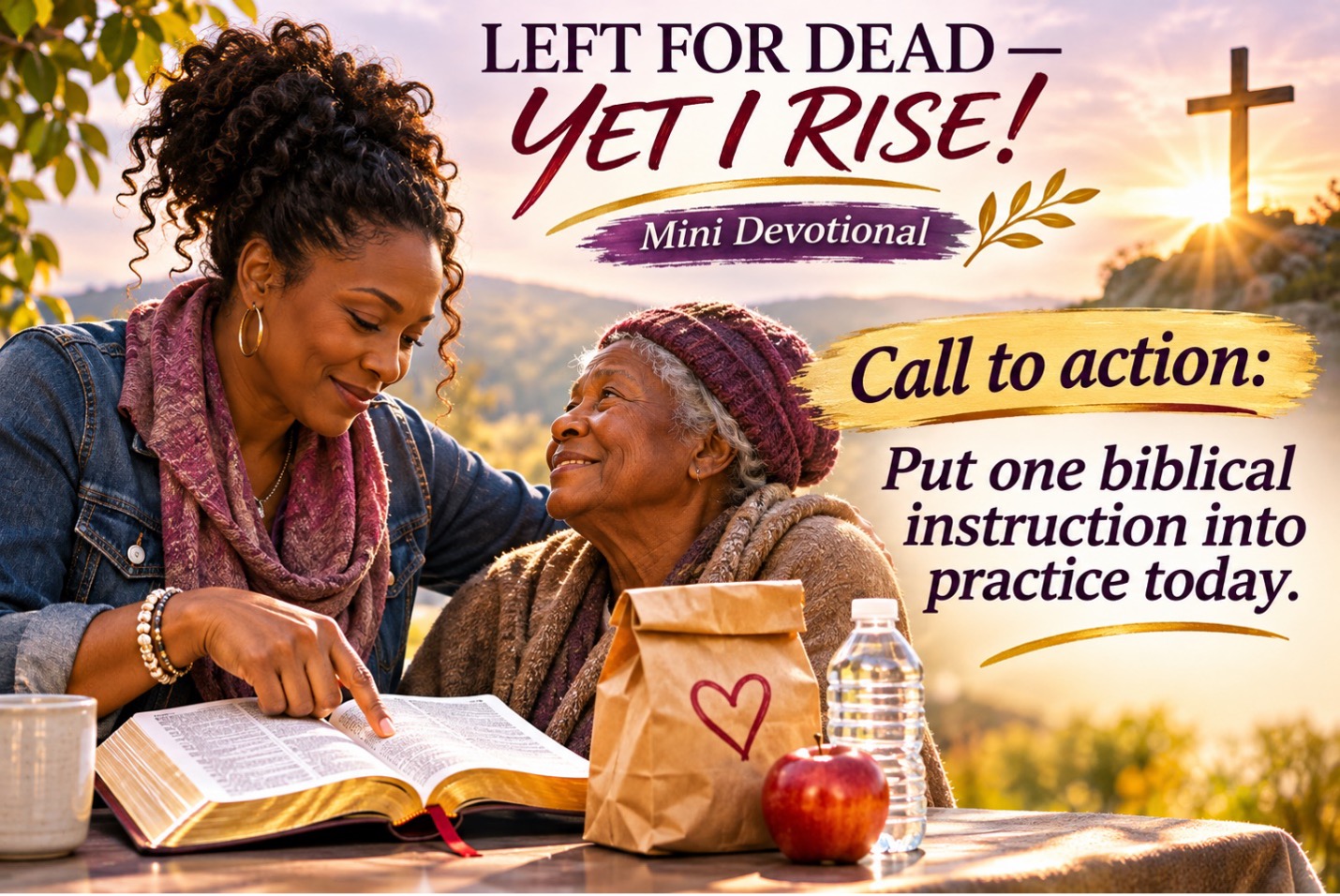
When Others Try to End a Story Only Jesus Can Write
Primary Scriptures: Acts 14:19–20; John 11:25–26
Abandoned. Betrayed. Rejected. Injured. Forgotten.
Sometimes life leaves us feeling as though we have been left for dead.
Perhaps someone deliberately wounded you. Perhaps another person’s carelessness changed your life. Or perhaps you are living with the consequences of choices made through pain, ignorance, fear, or disregard for what was right.
The circumstances may differ, but the suffering can be real.
What happened matters. What happens next matters, too.
They Left Paul for Dead
In Acts 14:19–20, Paul was stoned, dragged outside the city, and left for dead. His attackers believed his life was over.
But when the disciples gathered around him, Paul rose and entered the city. The following day, he continued his journey to Derbe.
The stone throwers were not qualified to write his ending.
Paul did not cause the violence committed against him. Yet his experience reminds us that suffering need not become the final chapter of our lives.
Notice also that Paul was not alone. The disciples gathered around him.
Sometimes God’s provision comes through the people who stand beside us—people who pray, listen, protect, encourage, and help us take the next faithful step.
The Stones and the Guardrails
Not every stone comes from another person’s hand.
Sometimes our own decisions contribute to the circumstances we face. A moment of recklessness, a destructive habit, or a harmful response to unresolved pain can affect our lives and the lives of others.
God’s Word provides wisdom, instruction, correction, and boundaries to help us live responsibly.
We cannot always escape the consequences of our choices. But neither should we blame people for suffering they did not cause.
Compassion does not cancel accountability. Accountability does not cancel compassion.
The question is not simply, “Who threw the stones?”
It is also, “What have I learned, and how shall I respond?”
The Resurrection and the Life
Jesus declared:
“I am the resurrection and the life.” — John 11:25, ESV
Our ultimate hope rests in Jesus Christ, who died for our sins and rose again.
Through His grace, we are called to respond in faith and obedience—to pray, forgive, repent, seek wisdom, accept help, and make necessary changes.
Not to earn salvation, but to live in response to what Christ has accomplished.
Rising does not always mean that every wound disappears or every consequence is reversed.
Sometimes rising begins in a hospital room, a counseling appointment, a treatment program, or a difficult but necessary decision.
Sometimes it means learning to live differently.
What Happens Next?
We cannot always change yesterday. But with God’s help, we can consider our next faithful step.
Change can become the catalyst for victory.
And when change is difficult, God’s grace remains sufficient to sustain us as we seek appropriate help and continue in faith.
The people who hurt you do not determine your identity. Your worst decision need not become your permanent identity either.
Our hope is in Jesus Christ—the Resurrection and the Life.
You may have been left for dead, but Jesus is still writing your story.
LEFT FOR DEAD — YET STILL I RISE!
Today is not the end of your story.
For the good of others and to the glory of God.